Chongqingxinjiangeurope
| Team info | |
|---|---|
| Description | Chongqing–Xinjiang–Europe Railway: Transforming Eurasian Trade Connectivity
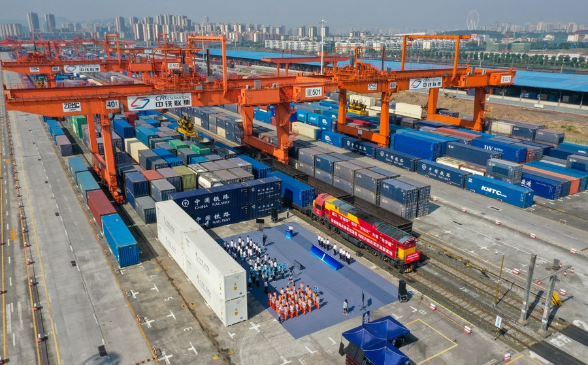
Chongqing Xinjiang Europe Railway The Chongqing–Xinjiang–Europe Railway, often referred to as the Yuxinou Railway, is one of the most significant rail freight corridors connecting China with Europe. As a key component of China's Belt and Road Initiative (BRI), the railway has revolutionized international logistics by providing a faster and more cost-effective alternative to traditional sea transport. Stretching across thousands of kilometers, this rail network links the industrial city of Chongqing in southwestern China with major European destinations, facilitating trade and economic cooperation across Eurasia. Chongqing Xinjiang Europe Railway History and Development The Chongqing–Xinjiang–Europe Railway was launched in 2011 to improve trade connectivity between China and Europe. The route was established to meet growing demand for efficient transportation of electronics, machinery, automotive parts, and consumer goods. Before the railway's introduction, most goods shipped between China and Europe traveled by sea, a process that could take over a month. The new rail corridor significantly reduced transit times, making it attractive to manufacturers and logistics providers. Route and Infrastructure The railway begins in Chongqing, one of China's largest manufacturing and logistics hubs. It travels through northwestern China, passing through the Xinjiang region before crossing into Kazakhstan. From there, the route continues through Russia, Belarus, and Poland before reaching various European destinations, including Germany. The corridor covers approximately 11,000 kilometers and passes through multiple countries, requiring extensive international cooperation and coordination among customs authorities, railway operators, and logistics companies. Economic Importance Faster Delivery Times One of the railway's greatest advantages is speed. Rail transport generally takes between 12 and 20 days, depending on the destination, compared to 30 to 45 days by sea freight. This shorter transit time helps businesses reduce inventory costs and respond more quickly to market demand. Supporting International Trade The railway has strengthened trade relations between China and Europe by providing a reliable transportation option for a wide range of products. Electronics, automobiles, industrial equipment, and consumer goods are among the most commonly transported commodities. Regional Development The corridor has also contributed to economic development in inland Chinese cities such as Chongqing. By improving access to international markets, the railway has attracted investment and enhanced the competitiveness of local industries. Environmental Benefits Compared with air freight, rail transport generates significantly lower carbon emissions. As businesses increasingly focus on sustainability, the Chongqing–Xinjiang–Europe Railway offers a more environmentally friendly solution for long-distance cargo transportation. The railway helps balance the trade-off between speed and environmental impact, providing a middle-ground option between air and sea freight. Challenges Despite its success, the railway faces several challenges. Differences in rail gauge standards between countries require cargo transfers at certain border crossings. Geopolitical developments, customs procedures, and operational coordination across multiple jurisdictions can also affect efficiency. In addition, rail capacity remains more limited than maritime shipping, making continued infrastructure investment essential for future growth. Future Prospects The Chongqing–Xinjiang–Europe Railway is expected to play an increasingly important role in global supply chains. As international trade continues to evolve, investments in railway infrastructure, digital logistics systems, and cross-border cooperation are likely to enhance the corridor's efficiency and reliability. The route represents a major step toward greater economic integration across Eurasia and demonstrates how modern rail transportation can support global commerce in the twenty-first century. Conclusion The Chongqing–Xinjiang–Europe Railway has transformed the movement of goods between China and Europe by offering a fast, reliable, and environmentally conscious transportation alternative. By connecting major economic centers across Eurasia, the railway has become a cornerstone of international trade and a powerful example of cross-border infrastructure cooperation. |
| Created | 26 Jun 2026 |
| Web site | http://eng.yidaiyilu.gov.cn/z/230714/index.shtml |
| Total credit | 0 |
| Recent average credit | 0 |
| Cross-project stats | Free-DC SETIBZH BOINCstats.com |
| Country | International |
| Type | None |
| Members | |
| Founder | 395evil |
| New members in last day | 0 |
| Total members | 0 (view) |
| Active members | 0 (view) |
| Members with credit | 0 (view) |

©2026 University of Washington
https://www.bakerlab.org