Chongqingxinjiang
| Team info | |
|---|---|
| Description | Chongqing Xinjiang Europe Railway: Transforming Eurasian Trade Connectivity
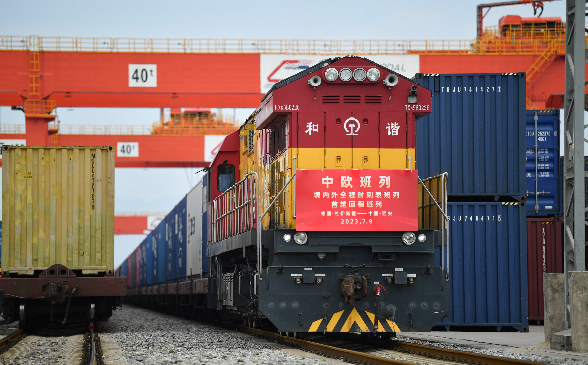
Chongqing-Xinjiang-Europe Railway The Chongqing–Xinjiang–Europe Railway has emerged as one of the most important international rail freight corridors connecting Asia and Europe. As part of the broader Belt and Road Initiative, this railway route plays a major role in strengthening trade connectivity, improving logistics efficiency, and supporting economic cooperation across Eurasia. Often referred to as the “Yuxinou Railway,” the route links the major Chinese city of Chongqing with European destinations through Xinjiang and several Central Asian countries. Since its launch, the railway has become a symbol of modern overland trade routes inspired by the historic Silk Road. Chongqing-Xinjiang-Europe Railway Overview of the Chongqing Xinjiang Europe Railway The Chongqing–Xinjiang–Europe Railway is an international rail freight service connecting western China to Europe through Kazakhstan, Russia, Belarus, Poland, and Germany. The railway route was developed to provide a faster alternative to traditional maritime shipping between China and Europe. While sea freight can take over a month, rail transport through the Eurasian corridor significantly reduces delivery times for many products. The route begins in Chongqing, one of China’s major industrial and manufacturing centers, and passes through the Alashankou border crossing in Xinjiang before continuing toward Europe. Historical Background The railway officially began operations in 2011 and quickly gained international attention as a major advancement in Eurasian logistics connectivity. It became one of the earliest China-Europe freight train routes and later served as a model for additional rail corridors developed under the Belt and Road Initiative. Historically, trade between Asia and Europe relied heavily on maritime shipping routes or the ancient Silk Road caravan networks. The Chongqing Xinjiang Europe Railway represents a modern version of these historical trade connections, using advanced rail logistics to improve cross-border commerce. Strategic Importance of the Railway Faster Transportation One of the biggest advantages of the railway is reduced shipping time. Rail freight between China and Europe generally takes around two to three weeks, significantly faster than sea transport. This makes the railway especially useful for industries that require quicker delivery times, including: Electronics Automotive components Machinery E-commerce products Industrial equipment Consumer goods Supporting Inland Economic Development The railway has also strengthened economic opportunities for inland Chinese cities such as Chongqing, which previously depended more heavily on coastal ports for international trade access. Improved rail connectivity allows manufacturers in western China to access European markets more efficiently, encouraging regional industrial growth and export expansion. Strengthening Eurasian Trade The route helps promote greater economic integration between China, Central Asia, and Europe. By improving transportation infrastructure and logistics coordination, the railway supports cross-border trade and investment cooperation. Key Countries Along the Route The railway corridor passes through several strategically important countries, including: China Kazakhstan Russia Belarus Poland Germany These international connections require extensive customs coordination, logistics management, and railway cooperation among participating nations. Impact on Global Supply Chains The Chongqing–Xinjiang–Europe Railway has become increasingly important in modern global supply chains. Benefits include: Reduced transportation time Improved supply chain flexibility Diversification of shipping routes Lower inventory holding costs Enhanced trade resilience The railway gained even greater significance during periods of global shipping disruption, when businesses sought alternative transportation options beyond maritime routes. Integration with the Belt and Road Initiative The railway is widely viewed as one of the flagship transportation corridors associated with the Belt and Road Initiative. The initiative focuses heavily on infrastructure connectivity, trade facilitation, and regional economic cooperation. Rail freight corridors such as the Chongqing Xinjiang Europe Railway demonstrate how transportation infrastructure can strengthen international commerce and economic integration. According to the Belt and Road Portal, rail connectivity has become a major component of cross-border economic cooperation under the initiative. Challenges and Operational Considerations Despite its advantages, the railway also faces several operational challenges. Customs and Border Procedures Cross-border rail transport requires coordination between multiple customs systems and regulatory frameworks. Efficient customs clearance remains essential for maintaining fast delivery times. Geopolitical Risks International trade corridors can be affected by geopolitical tensions, sanctions, and regional instability, which may impact logistics operations. Infrastructure Compatibility Different countries use varying railway gauges and technical standards, requiring cargo transfers or specialized equipment at certain border crossings. Competition with Maritime Shipping Although rail transport is faster, sea freight often remains more cost-effective for very large cargo volumes. Future Development and Innovation The future of the Chongqing–Xinjiang–Europe Railway is expected to include further modernization and technological integration. Potential future developments include: Smart logistics systems AI-powered cargo tracking Automated customs processing Green railway technologies Expanded freight capacity Digital trade integration As Eurasian trade continues to evolve, rail connectivity is likely to remain an important component of international logistics networks. Conclusion The Chongqing–Xinjiang–Europe Railway represents a major advancement in modern Eurasian transportation and trade connectivity. By linking Chongqing with Europe through Central Asia, the railway has created faster and more efficient trade routes that support global commerce and regional economic development. As part of the broader Belt and Road Initiative, the railway continues to play a significant role in shaping the future of international logistics, supply chain connectivity, and cross-border cooperation across Eurasia. |
| Created | 28 May 2026 |
| Web site | http://eng.yidaiyilu.gov.cn/z/230714/index.shtml |
| Total credit | 0 |
| Recent average credit | 0 |
| Cross-project stats | Free-DC BOINCstats.com SETIBZH |
| Country | International |
| Type | None |
| Members | |
| Founder | lexicaljosee |
| New members in last day | 0 |
| Total members | 0 (view) |
| Active members | 0 (view) |
| Members with credit | 0 (view) |

©2026 University of Washington
https://www.bakerlab.org